We are so excited to have our NEW website live! Thank you to Raina at Lost Dog Design for all of your help with the new site!
We love how the new website reflects the look and feel of our practice and office! You will also notice that the website is much more user friendly!
Quick Links:
Patient Center
Meet The Doctors
Our Staff
Take A Tour
Appointment Request
Be sure to also connect with us on Facebook, Twitter, and Google+

Monday, March 4, 2013

Thursday, January 31, 2013
How To Bring Back A Youthful Smile?
How Old Does
Your Smile Make You Look?
As we age, our teeth will change as well. They can
get darker, crack and thin, become worn down, become elongated, shift position
from periodontal disease, or we can even suffer from loss of teeth.
Most people’s teeth will darken over time. This
can include foods we eat, smoking, and even what we drink. Having a
darkened, yellowing smile can often make you appear less attractive to others
and older than you actually are. As we age, we also lose some of the enamel on
our teeth. As the cusps of our teeth wear down from chewing, teeth grinding,
nail biting, as well as other habits. This will lead to your bite collapsing a
little at a time. Wear also happens with aggressive brushing, high acid foods,
and cracking or chipping from brittleness.
“Longer teeth” can be another sign people
perceive, as something an older person would have. If we do not maintain proper
dental care throughout life we can develop periodontal disease. One of the
consequences of periodontal disease is gum tissue recession. This exposes
more of our teeth making them appear longer than they actually are.
Although tooth loss can occur at any age, missing
teeth can make you appear older. Having a full complement of teeth in your
smile is far more attractive than one littered with spaces from missing teeth.
Missing teeth cause surrounding teeth to shift. Over time, both crowns and
dental fillings may begin to fail and need to be replaced. This is especially
true in the front of the mouth where mismatched colors, stained fillings, and
chips in teeth are readily apparent when we smile. All of these factors can
also make your smile seem older than you are.
How To Bring Back A Youthful Smile?
Modern dentistry has developed quite a few procedures to maintain a youthful attractive smile. These include:
- Teeth Whitening
- Teeth Contouring
- Gum contouring and Gum grafting
Modern dentistry has developed quite a few procedures to maintain a youthful attractive smile. These include:
- Teeth Whitening
- Teeth Contouring
- Gum contouring and Gum grafting
- Composite Fillings and
Composite Veneers
- Porcelain
Veneers and Porcelain
Crowns
- Dental
Implants
- Properly
Aligned Teeth
If you have questions or
concerns about your smile Tranquility Park Dental is here to help. Call us
today at 402.496.9950~
Monday, November 19, 2012
Why Crooked Teeth Are A Problem
Many adults and teens in the
Omaha area come to Tranquility Park Dental Care for Invisalign. Invisalign is a
series of invisible aligners that dentists use as an alternative to wires and
brackets. Invisalign aligners are is easy to wear, and the average Invisalign
treatment can take less than 12 months. The common perception of Invisalign is
that they are used to straighten teeth for appearance and cosmetic reasons
only. However, Invisalign is most importantly used to align teeth
properly. If left untreated, crooked and
misaligned teeth can cause periodontal disease and create tremendous amounts of
stress on your teeth and jaw.
Teeth that are not aligned
properly in your mouth create what dentists call “malocclusion.” Malocclusion
affects 74% of American adults. Left untreated, malocclusion can lead to
periodontal disease. There are several types of malocclusion. A primary example
is crowded teeth that can cause buildup of plaque and tarter, as well as harbor
bacteria. This can lead to periodontal
disease, which may result in tooth and bone loss. Teeth with extra spacing
between them are another form of malocclusion.
This can leave room for food to stay lodged between them, risking sore
and tender gums. A deep bite is also a form of malocclusion which can damage
the palate, and cause premature wear and chipping on the lower front
teeth. A cross bite can also cause
premature tooth wear, and lead to periodontal disease, tooth and bone loss. An
edge-to-edge bite can result in teeth chipping and breaking, jaw joint pain,
and shortened or worn down front teeth. A final type of malocclusion is an open
bite that can lead to gum recession, tooth and bone loss, and excessive
premature wear on back teeth. If left untreated, malocclusion can lead to
periodontal disease which may then increase the risk for atherosclerotic
cardiovascular disease (which is the hardening of the arteries).
Periodontal disease begins
with gum redness or bleeding. You may also
notice bad breath. If not treated, gum inflammation can become much worse -
leading to receding gums, the formation of pockets between teeth and gums, bone
loss, and finally tooth loss. To avoid the negative effects of periodontal
disease it is very important to have properly aligned teeth. Good oral hygiene
can also reduce the chances of plaque retention, tooth decay, and periodontal
disease.
Invisalign is one option to
help straighten your teeth and prevent periodontal disease. Invisalign has a
96% patient satisfaction rating, and typically the cost is comparable to
traditional metal braces. If you or someone in your family would like more
information or has questions about Malocclusion, Periodontal Disease, or
Invisalign, please contact our office today. We are here to help!
12322 Emmet St
Omaha, Ne 68164
402.496.9950
www.tranquilityparkdental.com
www.tranquilityparkdental.com
Thursday, October 4, 2012
Brenda – Assistant

Brenda and her husband Ryan met in high school and have been
together for 18 years. They have been
married for 12 of those years. They have
four dogs who they consider their children – Tessa, Cami, Riley, and Dasha.
Brenda has a variety of interesting hobbies including
growing orchids, traveling, gardening and cooking.
In addition to working with us at TPDC, she is a
photographer who loves photographing families, seniors and babies.
Some other interesting facts about Brenda:
·
Spring and Fall are her favorite times of the
year.
·
Her favorite place to vacation is Cozumel,
Mexico.
·
Brenda loves to scuba dive.
Her favorite part of working at Tranquility Park Dental Care
is meeting new people. She also feels
like we are a family here at TPDC.
Wednesday, August 22, 2012

Gretchen – Hygienist
________________________________________________________________
Gretchen is one of our 5 dental
hygienists. She is originally from
Norfolk and attended Wayne State College where she earned a Bachelor of Science
in Music Education. We have been known
to tease her about starting a Tranquility Park Dental Choir but so far she has
not taken us up on that!
Gretchen received an Associate
Degree in Dental Hygiene from Iowa Western Community College before joining our
staff in 2008.
Gretchen has been married for 7
years to her husband Eric. They have an
adorable miniature schnauzer named Jeff,
and they love him like family.
One look at him explains why!

Some interesting facts about
Gretchen:
·
She loves to
cook and exercise, especially running & playing tennis
·
Her favorite
restaurant is Charleston’s
·
Banana
Republic and Ann Taylor Loft are her favorite stores.
·
She loves to
spend time with friends and family
·
Fall is her
favorite season because it is cool, trees are colorful, football season starts and
it is great running weather!
·
She loves to
read fiction on her kindle.
·
Her favorite
vacation was a trip to Sonoma, California where she and Eric spent their
honeymoon.
Gretchen loves getting to know
the patients and their families at Tranquility Park Dental Care. She also enjoys working with the professional
and hard working staff.
Wednesday, July 18, 2012
July's Featured Staff Member - Amber
Amber – Dental
Assistant
Amber is the most recent addition
to our staff at Tranquility Park Dental.
She has been with us a little over a year and received her training as a
dental assistant at Kaplan in 2009. She
works side by side with Dr. Weak assisting him with patient restorative care.

Amber grew up in Fremont and just
recently moved to Omaha. Her son Zach is
her pride and joy!
Some interesting facts about Amber:
·
Loves comic
books and music· Her dream vacation is traveling in an RV around the country
· She loves Mexican food, especially the spicy stuff!
Amber’s favorite part of the job
is working with everyone at TPDC , “Everyone is very nice and they genuinely
care for the patients. It’s like a happy
family here.”
Tuesday, June 19, 2012
June's Featured Staff Member-Stephanie
Our June's Featured Staff Member is...
Stephanie
Treatment
Coordinator
Stephanie
has been with Tranquility Park Dental Care for 11 years. She is on the Patient Services staff and
serves as a liaison between the practice management and clinical areas of the
practice.
Trained as a
dental assistant at Metro Community College, Steph has the extensive clinical
knowledge needed to:
-
assist our patients with dental emergencies
- support the Dr’s with their patient consultations and managing their schedules
- provide insurance companies with the documentation needed to substantiate claims and facilitate prompt payment
Steph has been married to her husband Scott for 20 years and they are kept busy running with 4 active children:
-
Kaylie is 18 and has graduated high school and is working for Marriott Hotels
- Kerstyn is 17 and loves working with animals and volunteers at the Nebr Humane Society
- Kassie is 15, she enjoys kids and has great comedic timing and keeps the family in stitches
- Cody is 13, plays baseball and works with his dad who owns a lawn care company
Some interesting facts about Steph:
-
Loves to read
- Likes shopping at TJ Max, Marshalls and Gordmans
- Favorite restaurant is Biaggi’s and her favorite dish is the lobster mac and cheese
- Favorite vacation spots are Colorado and Wisconsin – loves lakes and nature
- Has a heart for animals like her daughter and has 2 dogs, Gunner an 8 yrs old Doberman and Jack, her 3 yr old English bulldog. Jack is her stress reliever at the end of a long day
Wednesday, May 2, 2012
Do you have Periodontal Disease?
Periodontal disease is an infection of the tissues that support your teeth. Your gum tissue is not attached to the teeth as high as it may seem. There is a very shallow v-shaped crevice called a sulcus between the tooth and gums. Periodontal diseases attack just below the gum line in the sulcus, where they cause the attachment of the tooth and its supporting tissues to break down. As the tissues are damaged, the sulcus develops into a pocket: generally, the more severe the disease, the greater the depth of the pocket.Periodontal diseases are classified according to the severity of the disease. The two major stages are gingivitis and periodontitis. Gingivitis is a milder and reversible form of periodontal disease that only affects the gums. Gingivitis may lead to more serious, destructive forms of periodontal disease called periodontitis.
It is possible to have periodontal disease and have no warning signs. That is one reason why regular dental checkups and periodontal examinations are very important. Treatment methods depend upon the type of disease and how far the condition has progressed. Good oral hygiene at home is essential to help keep periodontal disease from becoming more serious or recurring. You don’t have to lose teeth to periodontal disease. Brush, clean between your teeth, eat a balanced diet, and schedule regular dental visits for a lifetime of healthy smiles.

Some factors increase the risk of developing periodontal disease:
- Tobacco smoking or chewing
- Systemic diseases such as diabetes
- Some types of medication such as steroids, some types of anti-epilepsy drugs, cancer therapy drugs, some calcium channel blockers and oral contraceptives
- Bridges that no longer fit properly
- Crooked teeth
- Fillings that have become defective
- Pregnancy or use of oral contraceptives
Several warning signs that can signal a problem:
- Gums that bleed easily
- Red, swollen, tender gums
- Gums that have pulled away from the teeth
- Persistent bad breath or bad taste
- Permanent teeth that are loose or separating
- Any change in the way your teeth fit together when you bite
- Any change in the fit of partial dentures
Wednesday, February 29, 2012
I'm too old to get braces
I’m too old to get braces!
Oh no no no no.
You are never too old to do Invisalign. Invisalign is an alternative to the standard “braces” of wires and brackets and a fantastic way to maintain the integrity of your teeth for a lifetime by wearing clear retainers. Clear retainers changed out every 2 weeks will provide small movement of the teeth that overtime with make you ecstatic of the changes you’ll notice. Not only is it easier and more esthetic than traditional braces but it cost the same as well as the same amount of time invested.
You are never too old to do Invisalign. Invisalign is an alternative to the standard “braces” of wires and brackets and a fantastic way to maintain the integrity of your teeth for a lifetime by wearing clear retainers. Clear retainers changed out every 2 weeks will provide small movement of the teeth that overtime with make you ecstatic of the changes you’ll notice. Not only is it easier and more esthetic than traditional braces but it cost the same as well as the same amount of time invested.

Please contact our office to learn more about Invisalign.


Wednesday, February 8, 2012
Going to the Dentist (according to Bill Cosby)
Monday, December 5, 2011
When should your child have their first dental checkup?
 Many parent magazines and pediatricians recommend that a child have their first dental checkup when they get their first tooth.
In most cases we believe that 2 1/2 - 3 years of age is early enough for that first visit unless you have reasons for concern, like a discolored tooth.
We recommend bringing the child along to a visit with a parent or an older sibling allowing them to get familiar with the environment before being scheduled for their very own visit.
Our hygiene staff is dedicated to providing a comfortable and fun learning environment to teach their young patients about good dental habits!
For more information click here.
For more information click here.
Wednesday, November 30, 2011
Get Flossed!
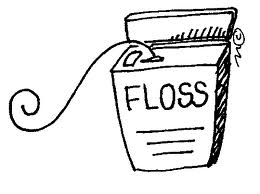
It's time to get ready for the holidays! When preparing for these family gatherings we pay close attention to the appearance of our table setting. We bring out the fine china and the good sliverware, checking to make sure they are pristine and the silver is polished. Do we treat our teeth the same way? Do we clean in between our teeth just as we would the tines of our good forks? Next time you set your table don't forget to clean your teeth just like you would your finest silverware!
Wednesday, October 26, 2011
Fighting Tooth Decay with Xylitol!
 Tooth decay happens when the bacteria in our mouth consumes the sugars we eat. When we eat food containing ordinary sugar (sucrose), it gives the bacteria on our teeth energy, allowing them to multiply and start making acids that can eat away the enamel on the teeth. This "acid attack" causes tooth decay and cavities.
Xylitol is a natural sweetener derived from the fibrous parts of plants. It does not break down like sugar and can help keep a neutral pH level in the mouth. Xylitol helps to starve the bacteria in our mouth so the acid attack that would otherwise last for over 30 minutes is stopped. To receive the full benefit of Xylitol mints/gum they should be used 2-3 times a day for a minimum of 5 minutes.
CAUTION! Xylitol has been proven toxic to dogs and the research is not conclusive regarding other pets……our recommendation – keep these tooth friendly products away from your furry friends!
Tuesday, October 25, 2011
Dry Mouth
Q: What are some causes of dry mouth?
A: There are many possible causes of xerostomia, or dry mouth. The most common being that it is a side effect of over 400 medications. Additional causes would be medical conditions like diabetes, stroke, and sjogren's syndrome.
The biggest problem with dry mouth from a dental health perspective is that it can cause tooth decay. There are some remedies that can make dry mouth more manageable: drink plenty of water, use prescriptions fluoride products, limit caffiene, avoid mouth rinses containing alcohol, chew xylitol gum/mints and stop tobacco use.
Monday, October 17, 2011
Bad Breath
Q: What causes bad breath?
A: The most obvious cause of halitosis (bad breath) is food. Some of the most common culprits are garlic, onions and alcohol.
Poor oral hygiene is also a major cause of bad breath. The breakdown of food and bacteria left in the mouth can result in a foul odor. Thorough brushing 2x/day and flossing daily along with the use of a tongue scraper will help eliminate the odor. Also, treatment of any periodontal disease is important.
Dry mouth, xerostomia, can contribute to bad breath but is often overlooked. Sugar free gums and mints can help by increasing salivary production. Drinking more water will also help.
Occasionally, bad breath can be caused by a sinus infection or chronic post nasal drip.
Smoking and chewing tobacco are also definite causes of halitosis.
Thursday, September 29, 2011
What is the tooth fairy's going rate?

There's no cut and dry answer to this one but I can say that most of the time it is $1.00 per tooth. Although I have heard it can range anywhere from $0.25 up to a whopping $10.00 per tooth. Some situations can change the rate. For example, a tooth extracted by the dentist might get double the value or the value can vary depending on whether it is a front tooth or a molar. Ultimately it is up to the tooth fairy to decide but no matter the amount, the excitement of finding that treasure under the pillow will be unforgettable.
What causes gum disease?
Our mouths are full of bacteria. These bacteria, along with mucus and other particles, constantly form a sticky, colorless "plaque" on teeth. Brushing and flossing help get rid of plaque. Plaque that is not removed can harden and form "tartar" that brushing doesn't clean. Only a professional cleaning by a dentist or dental hygienist can remove tartar.
Gingivitis: The longer plaque and tartar are on teeth, the more harmful they become. The bacteria cause inflammation of the gums that is called "gingivitis." In gingivitis, the gums become red, swollen and can bleed easily. Gingivitis is a mild form of gum disease that can usually be reversed with daily brushing and flossing, and regular cleaning by a dentist or dental hygienist. This form of gum disease does not include any loss of bone and tissue that hold teeth in place.
Periodontitis: When gingivitis is not treated, it can advance to "periodontitis" (which means "inflammation around the tooth.") In periodontitis, gums pull away from the teeth and form spaces (called "pockets") that become infected. The body's immune system fights the bacteria as the plaque spreads and grows below the gum line. Bacterial toxins and the body's natural response to infection start to break down the bone and connective tissue that hold teeth in place. If not treated, the bones, gums, and tissue that support the teeth are destroyed. The teeth may eventually become loose and have to be removed.
Source: National Institute of Dental and Craniofacial Research
Tuesday, August 9, 2011
Gautemala Day 1...the rest of the drive
 4 1/2 hours of travel, a couple of restroom breaks and a fried chicken dinner behind us, we are set to leave the pavement. It is about 7:45 pm, dark and raining. Norm has prepared us for what may lie ahead as he and Vicki had just come through the mud to pick us up. The advantage on this part of the trip is that there is now added weight and the luxury of knowing where the rough spots are so we can get the chains on the tires.
We take a moment to bring this last leg of the journey to the throne of grace trusting God to get us there safely.
 Carol and I, having been here 9 years earlier were acutely aware of the dangerous nature of this road with its switch backs, wash outs and 200-300 foot drop offs along a good portion of it.
After about 45 minutes Norm and Sebastian (driving the lead truck) decide it is time to put the chains on. We were so grateful for Norm and Sebastian's expertise in navigating the roads! The chains were on and off more than once and eventually Norm informs us that the tough part is over....as we turn to the north and see the lights of San Andreas we come upon a vehicle that has rolled into a 15 foot ditch. After a time of prayer and knowing everyone is unharmed we finish our journey into the city. A few turns and a couple of blasts from the horn and a set of big black doors open allowing us to enter the compound, an oasis of life and hope for 36 children.

We have a brief meeting and then off to bed, looking forward to all that God has in store for us.
Subscribe to:
Posts (Atom)