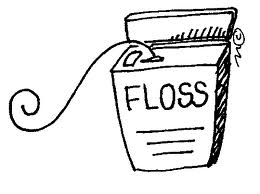
It's time to get ready for the holidays! When preparing for these family gatherings we pay close attention to the appearance of our table setting. We bring out the fine china and the good sliverware, checking to make sure they are pristine and the silver is polished. Do we treat our teeth the same way? Do we clean in between our teeth just as we would the tines of our good forks? Next time you set your table don't forget to clean your teeth just like you would your finest silverware!
Wednesday, November 30, 2011
Wednesday, October 26, 2011
Fighting Tooth Decay with Xylitol!
Tooth decay happens when the bacteria in our mouth consumes the sugars we eat. When we eat food containing ordinary sugar (sucrose), it gives the bacteria on our teeth energy, allowing them to multiply and start making acids that can eat away the enamel on the teeth. This "acid attack" causes tooth decay and cavities. Xylitol is a natural sweetener derived from the fibrous parts of plants. It does not break down like sugar and can help keep a neutral pH level in the mouth. Xylitol helps to starve the bacteria in our mouth so the acid attack that would otherwise last for over 30 minutes is stopped. To receive the full benefit of Xylitol mints/gum they should be used 2-3 times a day for a minimum of 5 minutes.
CAUTION! Xylitol has been proven toxic to dogs and the research is not conclusive regarding other pets……our recommendation – keep these tooth friendly products away from your furry friends!
Tuesday, October 25, 2011
Dry Mouth
Q: What are some causes of dry mouth?
A: There are many possible causes of xerostomia, or dry mouth. The most common being that it is a side effect of over 400 medications. Additional causes would be medical conditions like diabetes, stroke, and sjogren's syndrome.
The biggest problem with dry mouth from a dental health perspective is that it can cause tooth decay. There are some remedies that can make dry mouth more manageable: drink plenty of water, use prescriptions fluoride products, limit caffiene, avoid mouth rinses containing alcohol, chew xylitol gum/mints and stop tobacco use.
Monday, October 17, 2011
Bad Breath
Q: What causes bad breath?
A: The most obvious cause of halitosis (bad breath) is food. Some of the most common culprits are garlic, onions and alcohol.
Poor oral hygiene is also a major cause of bad breath. The breakdown of food and bacteria left in the mouth can result in a foul odor. Thorough brushing 2x/day and flossing daily along with the use of a tongue scraper will help eliminate the odor. Also, treatment of any periodontal disease is important.
Dry mouth, xerostomia, can contribute to bad breath but is often overlooked. Sugar free gums and mints can help by increasing salivary production. Drinking more water will also help.
Occasionally, bad breath can be caused by a sinus infection or chronic post nasal drip.
Smoking and chewing tobacco are also definite causes of halitosis.
Thursday, September 29, 2011
What is the tooth fairy's going rate?
There's no cut and dry answer to this one but I can say that most of the time it is $1.00 per tooth. Although I have heard it can range anywhere from $0.25 up to a whopping $10.00 per tooth. Some situations can change the rate. For example, a tooth extracted by the dentist might get double the value or the value can vary depending on whether it is a front tooth or a molar. Ultimately it is up to the tooth fairy to decide but no matter the amount, the excitement of finding that treasure under the pillow will be unforgettable.
What causes gum disease?
Our mouths are full of bacteria. These bacteria, along with mucus and other particles, constantly form a sticky, colorless "plaque" on teeth. Brushing and flossing help get rid of plaque. Plaque that is not removed can harden and form "tartar" that brushing doesn't clean. Only a professional cleaning by a dentist or dental hygienist can remove tartar.
Gingivitis: The longer plaque and tartar are on teeth, the more harmful they become. The bacteria cause inflammation of the gums that is called "gingivitis." In gingivitis, the gums become red, swollen and can bleed easily. Gingivitis is a mild form of gum disease that can usually be reversed with daily brushing and flossing, and regular cleaning by a dentist or dental hygienist. This form of gum disease does not include any loss of bone and tissue that hold teeth in place.
Periodontitis: When gingivitis is not treated, it can advance to "periodontitis" (which means "inflammation around the tooth.") In periodontitis, gums pull away from the teeth and form spaces (called "pockets") that become infected. The body's immune system fights the bacteria as the plaque spreads and grows below the gum line. Bacterial toxins and the body's natural response to infection start to break down the bone and connective tissue that hold teeth in place. If not treated, the bones, gums, and tissue that support the teeth are destroyed. The teeth may eventually become loose and have to be removed.
Source: National Institute of Dental and Craniofacial Research
Tuesday, August 9, 2011
Gautemala Day 1...the rest of the drive
4 1/2 hours of travel, a couple of restroom breaks and a fried chicken dinner behind us, we are set to leave the pavement. It is about 7:45 pm, dark and raining. Norm has prepared us for what may lie ahead as he and Vicki had just come through the mud to pick us up. The advantage on this part of the trip is that there is now added weight and the luxury of knowing where the rough spots are so we can get the chains on the tires.We take a moment to bring this last leg of the journey to the throne of grace trusting God to get us there safely.
Carol and I, having been here 9 years earlier were acutely aware of the dangerous nature of this road with its switch backs, wash outs and 200-300 foot drop offs along a good portion of it.After about 45 minutes Norm and Sebastian (driving the lead truck) decide it is time to put the chains on. We were so grateful for Norm and Sebastian's expertise in navigating the roads! The chains were on and off more than once and eventually Norm informs us that the tough part is over....as we turn to the north and see the lights of San Andreas we come upon a vehicle that has rolled into a 15 foot ditch. After a time of prayer and knowing everyone is unharmed we finish our journey into the city. A few turns and a couple of blasts from the horn and a set of big black doors open allowing us to enter the compound, an oasis of life and hope for 36 children.

We have a brief meeting and then off to bed, looking forward to all that God has in store for us.
Subscribe to:
Posts (Atom)